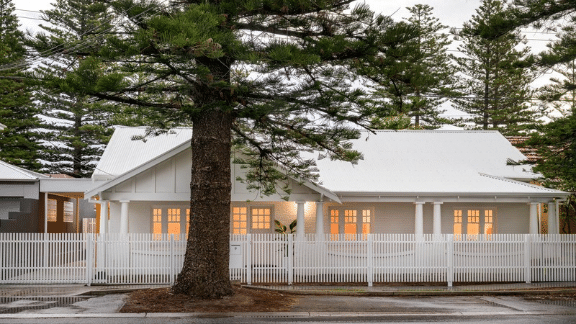

North Adelaide’s elegant Victorian terraces and charming Edwardian cottages are architectural treasures. They embody living history that continues to evolve as contemporary families seek expanded living spaces and modern amenities.
The challenge, however, is how to honour the past while embracing the future. The answer lies in thoughtful, well-planned home extensions that respect heritage values while delivering functional, beautiful homes.
Understanding North Adelaide’s heritage requirements
The distinctive character of North Adelaide stems from its rich architectural heritage, where Victorian terraces showcase intricate cast-iron lacework and Edwardian bungalows display robust red brickwork and timber detailing. This historical fabric is protected through multiple layers of legislation, creating opportunities and challenges for a simple home extension.
The South Australian Planning and Design Code serves as the regulatory backbone, operating through zones, subzones, and overlays that determine what development is permissible. Most significantly for North Adelaide residents, State Heritage Areas receive robust protection under the Heritage Places Act 1993 and the Planning, Development and Infrastructure Act 2016. Development within these areas must be “sympathetic to the character and heritage values,” requiring expert interpretation rather than simple compliance with prescriptive rules.
Local Heritage Places add another layer of protection, with statutory controls extending to any work that could materially affect heritage value. Even properties adjacent to heritage-listed buildings fall under the Heritage Adjacency Overlay, extending heritage considerations up to 60 metres from listed properties. This creates a ripple effect where heritage status influences development potential across entire streetscapes.
The definition of “development” in heritage contexts is exceptionally broad, encompassing not just new construction but alterations, painting, and “any work that could materially affect the heritage value of the place.” This means even seemingly minor changes may require formal approval, emphasising the importance of early consultation with planning authorities and heritage experts.
Navigating the approval process
Successful heritage extensions begin with meticulous pre-application due diligence. Property owners must identify all applicable overlays using the SA Planning Portal and SAPPA mapping tools, while engaging proactively with Heritage South Australia and the City of Adelaide’s planning department. This early consultation phase proves critical for identifying potential issues and developing strategies that satisfy local planning policies and state heritage requirements.
The development application process involves assessment against specific heritage policies, with applications impacting State Heritage Areas referred to Heritage South Australia for expert advice. This dual-authority system means satisfying general planning requirements and specialised heritage standards.
Creative design solutions for heritage homes
Contemporary heritage extension design has evolved beyond simple replication of historical styles. Modern approaches embrace intentional contrast, where new additions complement existing structures through thoughtful juxtaposition rather than mimicry. This philosophy allows architectural evolution to remain visually apparent while respecting the original building’s character.
Material selection is crucial in this balance. Original elements like aged stone and timber can be subtly echoed or deliberately contrasted with contemporary materials such as expansive glazing, textured cladding, or clean-lined steel. The objective is to create cohesion between old and new, even when employing contrasting materials that announce their contemporary nature.
Maximising natural light emerges as a key driver for many extensions. Older homes often suffer from limited natural light due to smaller, strategically placed windows reflecting historical living patterns. Contemporary interventions address this through expansive glazing, skylights, and open-plan layouts that enhance spatial flow and create stronger connections with outdoor areas.
Tailored solutions for terrace homes
North Adelaide’s characteristic narrow terraces present unique challenges that demand innovative responses. Vertical expansion proves particularly effective, with second-storey additions offering significant space increases without altering ground-level footprints. However, these additions require careful aesthetic consideration and higher-grade structural engineering to support additional levels while maintaining visual harmony with existing streetscapes.
Rear and side return extensions maximise efficiency on narrow blocks through innovative design strategies. Open-plan layouts create spaciousness within constrained footprints, while angled or skillion roofs generate impressive internal volume and external visual interest. Small internal courtyards prove transformational in these contexts, drawing natural light deep into narrow plans while creating visual breaks that enhance overall openness.
Roofline considerations require particular attention in heritage areas. While flat roofs often complement historical structures by providing clear visual breaks between old and new, some heritage overlays mandate pitched roofs to maintain existing character. Creative solutions like skylit twin-peaked roofs can satisfy regulatory requirements while achieving modern light and spatial qualities.
Approaches for cottage-style properties
Cottages, typically situated on larger blocks, offer distinct opportunities for ground-level expansion while maintaining their character. Ground floor extensions and wrap-around additions focus on seamless architectural integration, ensuring new elements feel naturally organic to the original house through careful consideration of matching rooflines, window styles, and external cladding.
For properties with a lot of land, additions can be conceived as detached pavilions or linked structures. These separate buildings, connected by covered ways to existing cottages, maintain the essential character of smaller original structures while preventing visual domination by new additions. This distributed approach creates distinct functional zones while preserving heritage facade integrity.
Sensitive restoration is incredibly important throughout these projects. Ornate features like detailed cornices, original stone and timber elements, and unique room layouts demand careful preservation while modern functionality is discreetly integrated. The most successful projects achieve a sophisticated balance where contemporary amenities are seamlessly incorporated without compromising the aesthetic purity of either historic or new architectural elements.
The specialised expertise of a skilled home extension builder
The complexity of heritage extensions means collaboration with experienced professionals from project inception is basically non-negotiable. BTF Constructions’ specialisation in character renovations is ideal for North Adelaide’s unique requirements, making us the home builder Adelaide trusts. Our comprehensive design and build services encompass the entire project lifecycle, ensuring reliable coordination between design intent and construction execution.
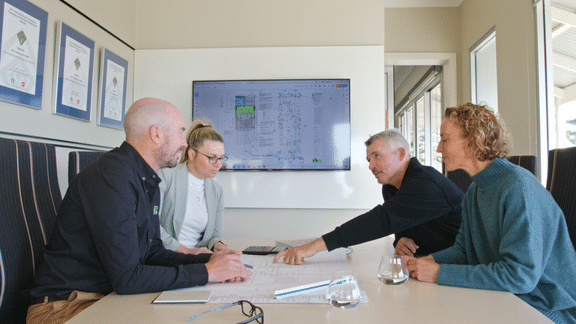
Our transparent and collaborative approach proves particularly valuable in heritage contexts. Our emphasis on keeping clients informed about how evolving ideas impact budgets and timeframes, combined with regular site visits and meetings, creates a trusted partnership essential for navigating regulatory complexities and achieving successful outcomes.
When executed thoughtfully, North Adelaide’s cherished homes can continue to inspire and serve families for generations to come. The challenge of blending old with new transforms from constraint into creative opportunity, and BTF Constructions is here to help you through it.